
Jayden reflects on how a difficult chess game, an altered plan and honest feedback taught him to stay composed, revise his assumptions and understand problems more deeply.
{{ vm.tagsGroup }}
23 Aug 2026
5 Min Read
Jayden Wong Kah Ho (Contributing Writer), The Taylor’s Team (Editor)
Jayden reflects on how a difficult chess game, an altered plan and honest feedback taught him to stay composed, revise his assumptions and understand problems more deeply.
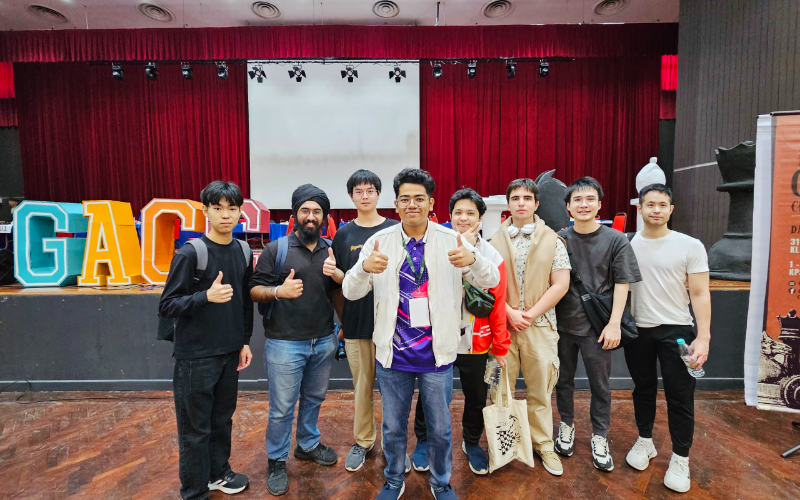
At the fourth Taylor's Chess Championship, I played against a FIDE Master for the first time. By the middlegame, I was clearly losing.
Then my opponent overlooked a tactical sequence. It did not suddenly put me in control, but it gave me a route back towards equality. With very little time remaining, I had to stop thinking about how bad the position looked and concentrate on the choices that were still available. I eventually lost on time, yet the part I remembered was the need to stay composed, examine defensive resources and make a calculated decision when there was no perfect option.
I did not leave the board thinking that chess had prepared me for Engineering. That connection came later. The more unfamiliar problems I encountered, the more I recognised the same habits: understand the situation, compare several possible responses and think ahead to what each decision could change.
Chess taught me that an uncomfortable position is not the same as a position without possibilities. If I became distracted by the fact that I was behind, I would miss the next useful move. Staying calm did not guarantee a win; it simply allowed me to see the problem more clearly.
That distinction matters to me in Engineering. A design can look elegant at first and still contain weaknesses. A calculation can seem convincing and still rest on an assumption that needs to be questioned. The aim is not to defend the first answer because it is mine, but to keep looking at the information in front of me.
The game also showed me that composure is practical. Under time pressure, I could not analyse every possible line. I had to identify the most important risks, decide what deserved attention and accept that uncertainty would remain. I began to see problem-solving less as finding one brilliant answer and more as making a series of careful choices.
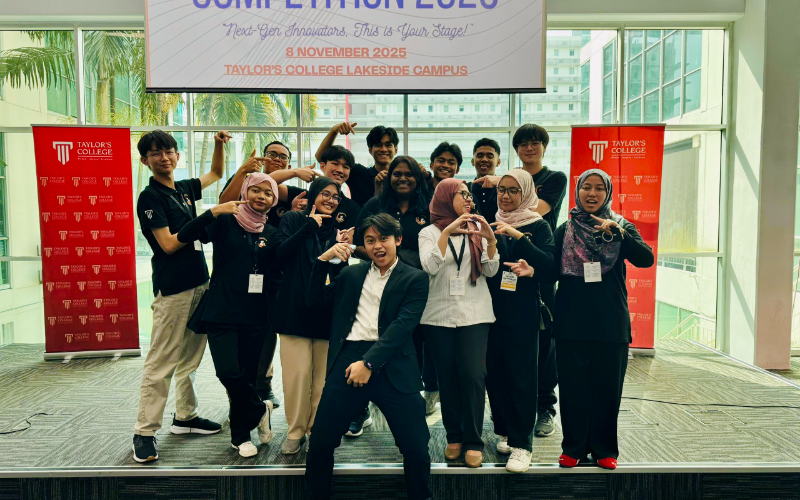
I encountered a similar lesson through my role as Vice-President of the Science Club while helping to organise the Taylor's National Virtual Science Odyssey, a nationwide competition. The original plan was to run it as a physical event, but venue arrangements, school outreach and other logistics needed more lead time than we had.
It would have been easy to keep defending the original idea because the committee had already invested effort in it. Instead, we moved the event online. I worked with the team on an anti-cheating Google Forms system and question-setting, then contacted the winners to arrange the delivery of medals and certificates.
The change was not simply a matter of putting the same event on a screen. We had to reconsider how participants would take part, how the competition could remain fair, and what a workable version would look like within our constraints. I learnt that leadership is not always about pushing a plan through. Sometimes it means recognising what the situation will realistically support and helping the group build a better route forward.
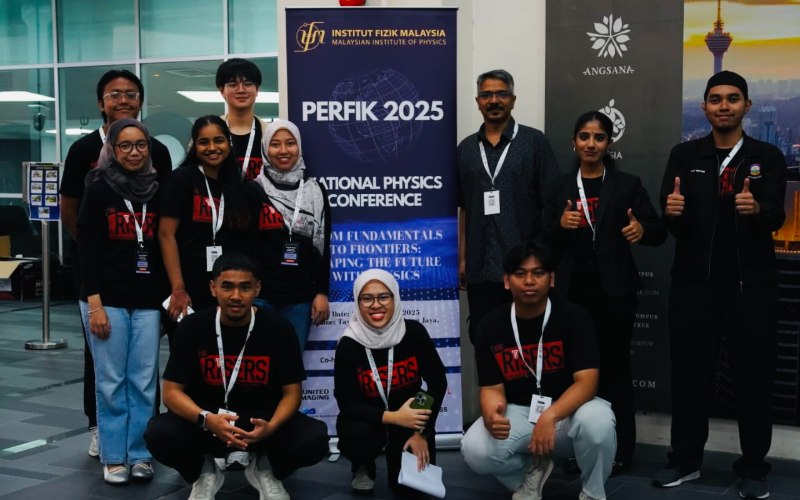
The importance of revising an idea became even clearer when I presented my road-system project on hybrid energy harvesting at the National Physics Conference 2025. I had considered how solar panels might sit beneath light-transmitting concrete, but a judge pointed out that my design had overlooked heat dissipation and airflow. With limited ventilation, the panels could overheat.
My first idea had focused on whether the system was technically imaginable. The feedback forced me to consider whether it could operate under real-world conditions. I began considering other settings, such as bridge installations where natural airflow might be available, and the possibility of ventilation channels. I knew these were ideas to test, not solutions I had proved.
That criticism was more useful than simple approval. It changed the questions I asked. Instead of stopping at “Can this be built?”, I also had to ask, “What happens when it is exposed to heat, limited airflow and the conditions of everyday use?” The project received the Best Digital Poster Award at PERFIK 2025, but what stayed with me was the weakness the judge helped me see.
The same shift—from accepting an answer to understanding its conditions—also shaped how I learnt Mathematics. Ms Ilaya, my Mathematics lecturer at Taylor's College, rarely stopped at the quickest solution. She unpacked concepts and approached them from several perspectives until we understood why the method worked.
That mattered when I faced a question that did not look exactly like an example I had practised. A memorised procedure is useful only while the problem behaves as expected. Understanding the reasoning behind it gives me more to work with when the form changes.
Her approach made me more willing to work through unfamiliar questions on my own. I could return to the underlying idea, test what I knew and rebuild the solution instead of assuming that difficulty meant I had reached the limit of my ability. It was another version of what I had learnt in chess and leadership: when the obvious path fails, understanding creates other options.
None of these experiences gave me an Engineering mindset on its own. The chess game taught composure. The Science Odyssey taught me to adapt a plan with other people. The poster feedback taught me to look for operating constraints, and Mathematics taught me to value reasons over routines. Together, they changed how I respond when I do not yet know the answer.
I have received an offer to study Engineering at the University of Cambridge. I currently hope to move towards Electrical and Electronic Engineering from the third year, and I see that next step as another environment in which the questions will become harder and the first answer will rarely be enough.
For students still in high school, my advice is not to wait for one defining experience. Join a club, volunteer, enter a competition or explore an interest that feels unfamiliar. Some attempts will work, some will need to change, and some may simply show you what you overlooked. Their value often becomes visible only when you connect them later.
If you are beginning to ask how your own interests could become stronger ways of thinking, exploring Cambridge A Level at Taylor’s College may be a useful next step.
Jayden is a Cambridge A Level student at Taylor's College with an interest in Engineering, chess and learning how ideas work beyond the page.