Programme Deep Dive: Your Journey as a Foundation in Science Student

{{ vm.tagsGroup }}

23 Sep 2026

6 Min Read

Josephine Yap (Editor)

IN THIS ARTICLE

Recall when you fell and got a wound. It stings at first, then gradually starts to close and heal on its own within a few days. then starts closing on its own within days. Rice left out on the kitchen counter starts to smell different by the time you get home from school. Eat the same meal as your friend, and somehow only one of you ends up with a stomachache an hour later.


Behind each of these moments are processes quietly happening beneath the surface. Cells repair damaged tissue. Bacteria multiply when conditions allow. Your body reacts differently depending on what's happening inside it, even when the situation looks the same.


Science helps us understand these hidden processes. It explains not just what happens, but why it happens. And once you start asking why, it's difficult to stop.

What It's Like to Study Foundation in Science

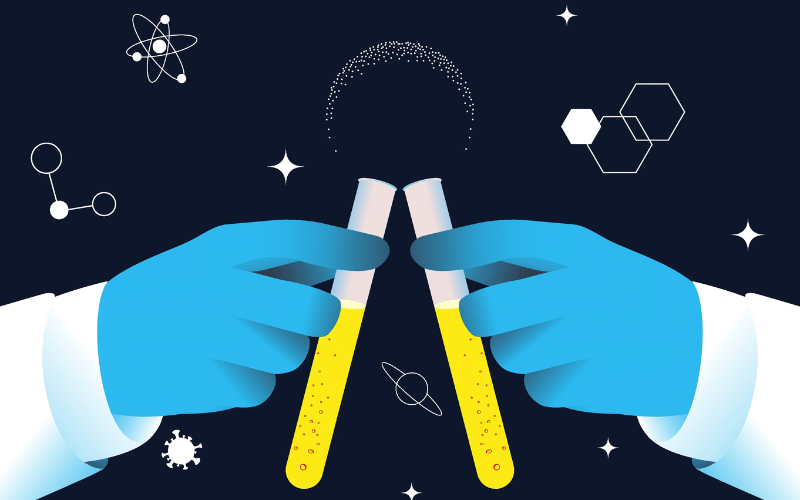
Gloved hands holding two test tubes with yellow liquid

Mix curiosity with evidence. See what happens.

It feels more like learning to understand the world in a way you never had to before.


You begin with the fundamentals through subjects such as Cell Biology, Chemistry, Physics and Mathematics, discovering how each helps explain different aspects of the natural world. As you progress, ideas that may have seemed separate in secondary school begin to connect, giving you a broader understanding of how the natural world works.


Through practical investigations and collaborative learning, you'll learn to observe carefully, analyse evidence and explain your findings. You'll also strengthen your research, presentation and teamwork skills as you work with others to explore scientific ideas and communicate what you've discovered.


In a typical week, you'll move between lectures and laboratory sessions, where you can put what you've learnt into practice. Sometimes your prediction won't match the outcome, but instead of treating that as failure, you'll learn to understand what influenced the result and what it reveals.


As your understanding grows, you'll begin to recognise that science is rarely about one process happening on its own. For example, understanding how the human body fights infection means connecting concepts from biology, chemistry and even physics to explain how different systems work together. Learning to make those connections becomes just as important as learning the concepts themselves.

Studying Foundation in Science in Malaysia

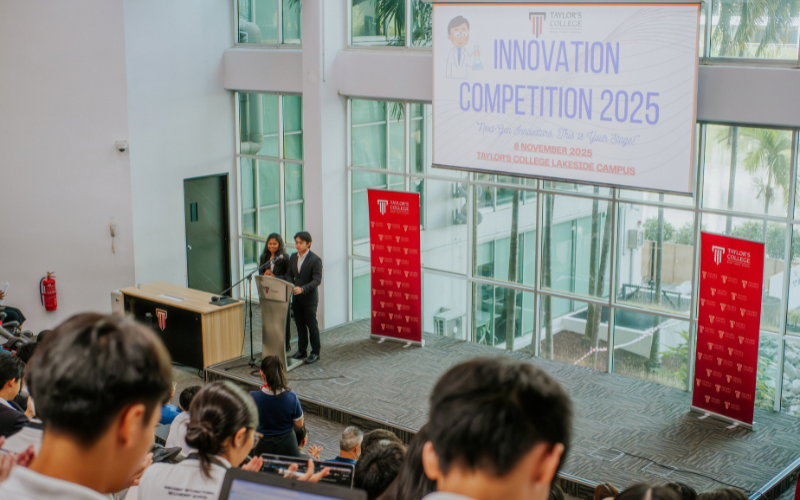
Two presenters at the Taylor's College Lakeside Campus for the Innovation Competition 2025, addressing an audience.

From 'what if?' to 'let’s find out.'

If you're planning to take the Foundation in Science, you'll need at least five credits in your SPM or O-Levels, including Mathematics and two science subjects. UEC applicants require a minimum of 3 Bs, including Biology, Chemistry and either Physics, Mathematics or Additional Mathematics.


If you're planning to pursue a degree in Medicine or Pharmacy after your Foundation, it's worth checking the entry requirements early, as these programmes often have additional progression requirements beyond the Foundation itself.


Learning is mainly coursework-based, and along the way you'll complete practicals, assignments and problem-based tasks that help you apply what you've learnt. Beyond the classroom, research interactions, competitions such as STEM Innovation and community-based projects such as the soup kitchen at Pertiwi Food Kitchen give you opportunities to put scientific thinking into practice while developing teamwork and communication skills.


Studying science in Malaysia also means learning in a country where scientific knowledge helps address challenges that are part of everyday life. Whether it's ensuring food safety through quality testing, advancing tropical disease research, protecting Malaysia's rich biodiversity, or improving the sustainability of industries such as agriculture and palm oil, science plays an important role in solving problems that affect communities across the country.


Understanding these real-world applications gives greater meaning to what you learn in the classroom. The scientific concepts you study become more than theories, helping you recognise how evidence-based thinking contributes to decisions that shape public health, industry and the environment.

Where This Could Lead Next

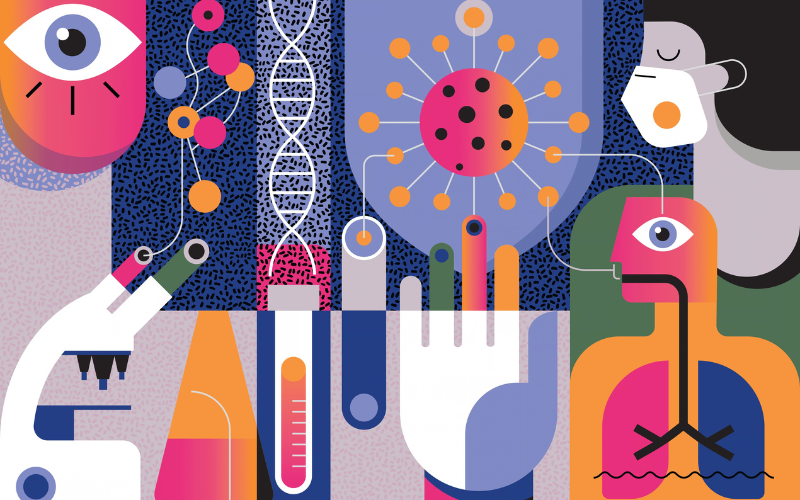
An abstract illustration of science and medical themes

One scientific foundation. Many ways forward.

One of the strengths of Foundation in Science is that it doesn't prepare you for just one destination. Instead, it builds a scientific way of thinking that can be applied across different fields, depending on the questions you want to solve.


After completing the Foundation in Science, you can progress into degree programmes in areas such as:

Medicine (MBBS)

Trains you to diagnose, treat and care for patients.

Pharmacy

Focuses on how medicines are developed, dispensed and managed in healthcare.

Biomedical Science

Explores the science behind diseases and how new treatments are discovered.

Food Science

Focuses on food production, safety and nutrition.

Biotechnology

Applies biology to solve challenges in healthcare, agriculture and the environment.

Pharmaceutical Science

Focuses on how medicines are discovered, formulated, developed and manufactured.

Applied Health Sciences

Explores human health through areas such as genetics, embryology, neuroscience and nutrition.

Did you know?
Foundation in Science can also lead to Engineering degrees, where scientific principles are applied to design solutions for the physical world.


The same scientific thinking that helps someone understand the human body can also be applied to developing medicines, improving food systems, designing technologies or solving engineering challenges,


If you're still exploring which direction suits you best, that's part of the process. The foundation year gives you the opportunity to discover your interests before choosing a degree pathway with greater confidence.


As your interests begin to take shape into real possibilities, you can explore different career pathways through Career Compass, where you can see the connection between what you study and career fields such as: 

Is Foundation in Science Right for You?

An illustrated woman looking confused amidst colorful winding arrows

Curiosity rarely travels in a straight line.

'Science isn't for everybody' is one of those lines that's repeated so often, it starts to sound true. Most of the time, though, it comes from one exam result, one difficult topic or a label picked up in secondary school. None of those things truly decide whether science is the right path for you.


Foundation in Science may suit you if you're naturally curious about how things work and the reasons behind them. You might wonder why the night sky changes throughout the year, why some plants can grow with little sunlight, why metal corrodes after prolonged exposure to air and moisture, or why diseases spread differently between communities.


Sometimes an unexpected result can reveal just as much as the one you predicted, encouraging you to look closer, reconsider your assumptions and try again.


The programme isn't about getting every answer right the first time. It's about being willing to investigate, test ideas and improve your understanding when things don't go as expected.


You also don't have to figure it all out on your own. At Taylor's College, your Foundation in Science journey is supported by Taylor'sphere™, Taylor's wider education ecosystem that connects academic study with industry exposure, co-curricular development, pastoral care and peer support through PALS (Peer Assisted Learning Support). If you want to ease into college before the year officially begins, Start It Right (SIR) is a complementary two-week programme available at the start of term.

Conclusion

The questions you've noticed throughout this article are only the beginning.


Foundation in Science gives you the opportunity to explore them in greater depth, understand the processes behind them and discover where your interests might take you next.


And that's where your journey begins.

If you're curious about how the human body works, how substances behave, or how the world around you function, Foundation in Science gives you the opportunity to explore different areas within science before deciding where you want that curiosity to take you.

YOU MIGHT BE INTERESTED
{{ item.articleDate ? vm.formatDate(item.articleDate) : '' }}
{{ item.readTime }} Min Read