One of the most valuable outcomes of continuous learning is the opportunity to step back and reflect on how students themselves are changing. While teaching methods continue to evolve, so do the challenges students face both inside and outside the classroom.
Although Salina teaches English as an Additional Language (EAL) and Vethanayagam teaches Economics, both see a growing need to help students develop independent learning, critical thinking and the ability to stay focused in an increasingly connected world.
Salina has noticed the changing needs of today's students over the years.
‘Today's Taylor’s SACE students need more support in areas such as time management, critical thinking, independent learning and managing stress. They also require guidance in maintaining focus and balancing academic demands with distractions from technology and social media.’
For Salina, supporting students today goes beyond delivering subject knowledge. It also means helping them develop their habits and confidence to learn independently.
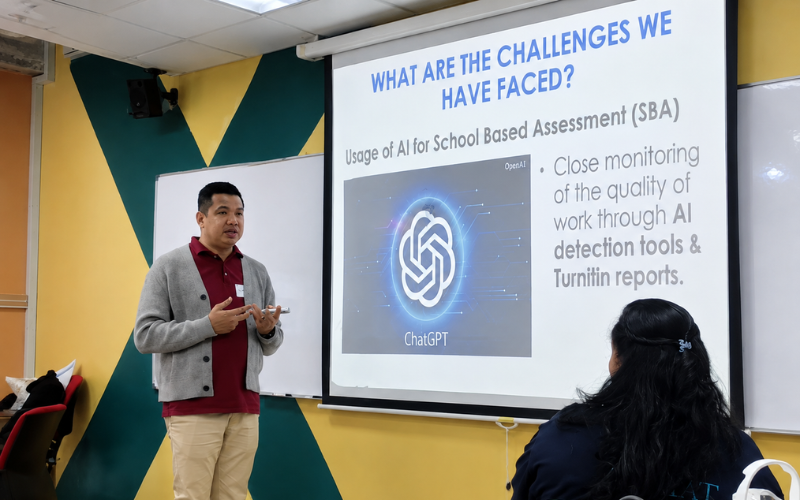
As technology and artificial intelligence make information more accessible, Vethanayagam believes students need stronger support in evaluating information critically rather than simply accepting or reproducing what they find. He sees technology and AI as another reason educators must continue adapting.
‘Teachers must be able to integrate technology meaningfully, guide students in using AI responsibly, and create engaging learning environments that develop creativity, critical thinking and problem-solving skills,' said Vethanayagam.
Their insights highlight how the role of educators continues to evolve. Today, preparing students for success means not only building subject knowledge, but also equipping them with the judgement and learning habits to navigate a world where information is always within reach.