Programme Deep Dive: Your Journey as a Foundation In Engineering Student

{{ vm.tagsGroup }}

18 May 2026

7 Min Read

Jeremy Achariam (Academic Contributor), Taylor's Team (Editor)

IN THIS ARTICLE

When you think of engineering, you might picture towering skyscrapers or iconic bridges.


Yet engineering is just as present the moment you enter a building. The lift carries people safely between floors. Electricity reaches every room. The structure supports thousands of people every day, all without you giving it a second thought.


Behind these everyday experiences are engineering decisions made long before anyone uses them. How much weight should a structure carry? Which materials can withstand years of heat, rain and constant use? How should a lift respond if the power fails? What could go wrong, and how can it be prevented before it ever does?


All these are part of the questions engineers ask long before the rest of us ever think about them.
What It’s Like to Study Foundation in Engineering

It feels more like making sense of the things you've always seen but never fully understood. From how bridges withstand constant traffic to why materials age differently and how electrical circuits respond under stress, engineering provides the explanations behind everyday experiences.


You begin with the fundamentals, discovering how subjects you've already studied in secondary school, such as physics, mathematics and chemistry, come together to solve engineering problems rather than exist as separate subjects.


As you apply these concepts, you'll learn to analyse problems, evaluate different approaches and justify why one solution works better than another. Along the way, you'll also explore how engineering has shaped societies, discover how technology addresses real-world challenges, and develop computational thinking as the challenges become increasingly complex.

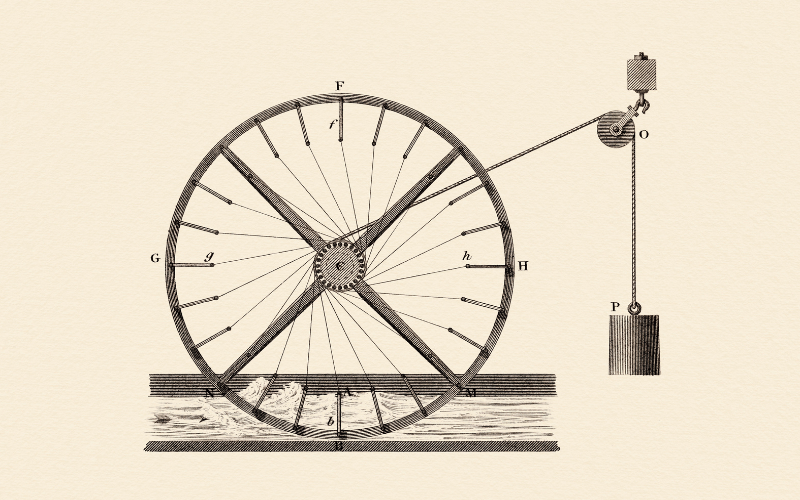
Illustration of a large wooden water wheel with a hanging weight beside it

Every modern breakthrough has an earlier draft.

What makes this different from how engineering may have felt in school is that you're no longer expected to simply produce the right answer. Instead, you're challenged to explain your reasoning, defend your decisions and refine your ideas based on evidence.


Through lectures, tutorials and hands-on project work, you'll test ideas, discover why they don't always work the first time, and refine them based on what you've learned. That gap between prediction and outcome isn't treated as failure. It's treated as part of the engineering process.

Studying Foundation in Engineering in Malaysia

If you're planning to study Foundation in Engineering, you'll need at least five credits in your SPM, O-Levels or UEC equivalent, including Mathematics and one Science subject. UEC holders will need a minimum of 3 Bs under the same requirements.


The concepts you've already encountered in science subjects such as Physics and Chemistry come together to explain how structures stand, materials behave, and systems perform under different conditions. As you progress, you'll build on these foundations to explore concepts such as geometry, calculus, motion, forces, energy, electromagnetism and molecular structures/bonds in greater depth.

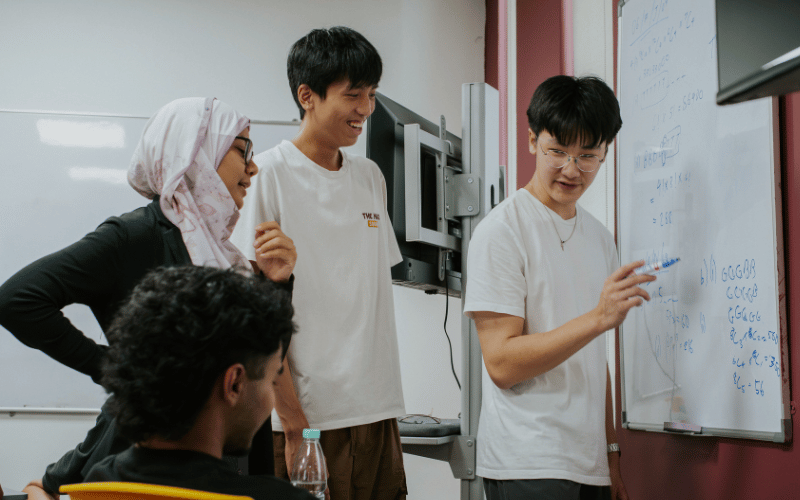
Engineering students discussing ideas around a whiteboard in a classroom

 "Let's try this instead."


Learning combines coursework, assignments and examinations with project work that encourages you to apply what you've learned to practical engineering challenges. Along the way, you'll also be introduced to how engineering projects are planned and managed, from developing proposals and organising project timelines to working collaboratively as a team.


Beyond the classroom, you'll have opportunities to participate in community-focused projects, where you can apply your skills in meaningful ways while developing teamwork, leadership and a greater understanding of how engineering can contribute to society.


Studying engineering in Malaysia means learning within a country shaped by its own environmental and industrial challenges. Located near the equator, Malaysia experiences heavy monsoon rainfall, making flood mitigation an important engineering priority. Its extensive power grid delivers electricity across diverse landscapes, while offshore platforms in the South China Sea operate in demanding marine environments.


Although each solves a different challenge, they all begin with engineers asking how to design systems that remain safe, reliable and resilient over time.

Where This Could Lead Next

One of the strengths of Foundation in Engineering is that it gives you time to explore your interests before committing to a specific engineering specialisation. Instead, it builds a strong foundation in mathematics, science and engineering principles, giving you the knowledge to explore different engineering disciplines before deciding where your interests lie.


After completing the programme, you can progress into Taylor’s University degree pathways such as:

A hand selecting from robotics, artificial intelligence, engineering, electronics and programming icons.

Different challenges. Different disciplines. Same curiosity.

While each discipline solves different kinds of challenges, they all begin with the same engineering mindset you've started developing during your Foundation year. As your interests begin to take shape into real possibilities, you can explore different career pathways through Career Compass, where you can see the connection between what you study and career fields such as:

Did you know? The engineering world is constantly evolving, which is why many degree programmes offer opportunities to specialise in emerging fields such as robotics, artificial intelligence, sustainable engineering and smart manufacturing.

Is Foundation in Engineering Right for You?

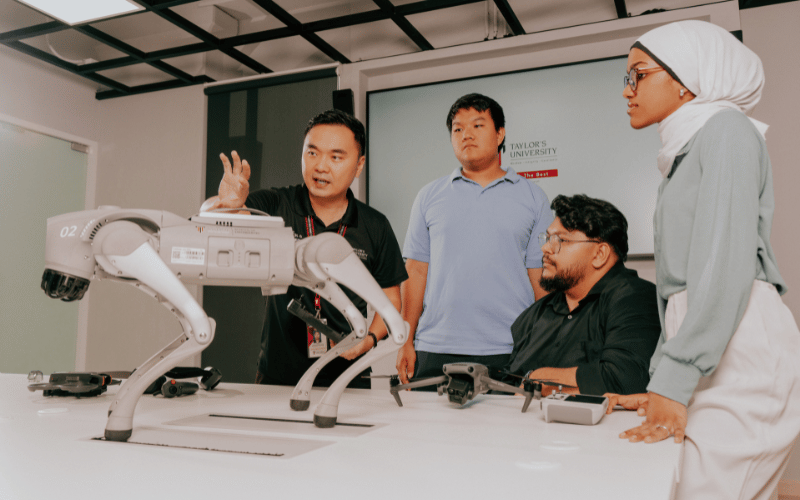
Engineering students gathered around a robotic arm and quadruped robot in a laboratory.

Where others see the ordinary, engineers see possibilities.

As you explore the different possibilities engineering offers, it's worth considering the kinds of problems you'd enjoy solving. You might enjoy understanding how things work, designing practical solutions, exploring new technologies or applying mathematics and science to real-world challenges. What matters most isn't having all the answers from the beginning, but being willing to question, investigate and keep improving an idea until it works.


If you're looking for a programme that develops this way of thinking before you decide which one you would like to pursue, Foundation in Engineering could be the right place to begin.


Also, if you're wondering how you'll adapt to college life, you won't have to figure it out on your own. Through Taylor'sphere™, you'll be supported from day one through initiatives such as Start It Right (SIR), which helps you settle into college life, and PALS (Peer Assisted Learning Support), where senior students guide you both academically and beyond the classroom.

Conclusion

By now, you've seen that engineering is about far more than machines, structures or technology. It's a way of understanding how the world works and asking how it could work better. The structured methods and practices you develop through engineering can also be applied across many fields beyond engineering itself.


Perhaps the next question to explore is which kinds of engineering challenges interest you most. Whether those challenges involve infrastructure, intelligent technologies, sustainable solutions or the systems people rely on every day, engineering begins with the same mindset: understanding first, then improving.


And that's where your journey begins.

If you're curious about how the world around you works and enjoy solving problems through science, mathematics and design, Foundation in Engineering gives you the opportunity to explore different engineering disciplines before deciding where you want that curiosity to take you.

YOU MIGHT BE INTERESTED
{{ item.articleDate ? vm.formatDate(item.articleDate) : '' }}
{{ item.readTime }} Min Read