AI Consumers and Virtual Cafés: The Teaching Behind a Lecturer's National Award

{{ vm.tagsGroup }}

02 Nov 2026

5 Min Read

The Taylor’s Team (Editor)

IN THIS ARTICLE

Galvin Lee Kuan Sian has been named a 2026 JCI Ten Outstanding Young Malaysians (TOYM) honouree in the Academic Leadership and/or Accomplishment category. He received the recognition on 19 September 2026 at Sheraton Johor Bahru, at the age of 25.


A marketing and economics lecturer and programme coordinator for the Diploma in Business at Taylor’s College, Galvin submitted a portfolio spanning teaching, educational innovation and academic leadership, alongside his wider scholarly and professional activities.


Among that work, he identifies Global Voices: AI Persona Lab as his strongest teaching contribution.

A Portfolio of Teaching and Academic Leadership

Preparing his TOYM portfolio meant bringing together responsibilities that usually occupied different parts of his working week. There were lessons to prepare, assessments to review and learning resources to maintain. Programme coordination involved decisions about how teaching was organised and how students experienced the programme across modules.


His educational projects grew within those responsibilities. Alongside Global Voices, he developed business simulations and redesigned the organisation of his online module materials. His wider portfolio also included publications, professional reviewing and external judging work.


The submission gave him an opportunity to consider what those activities enabled other people to learn or accomplish. Some of that contribution was less visible than the projects themselves: responding to students, revising materials and keeping assessment expectations clear.


Galvin attributes much of his opportunity to develop and apply new approaches to the academic environment at Taylor’s College. He points to digital learning infrastructure, professional development and colleagues’ academic support. He developed the learning activities for his modules, using the College’s existing learning platform and assessment processes.

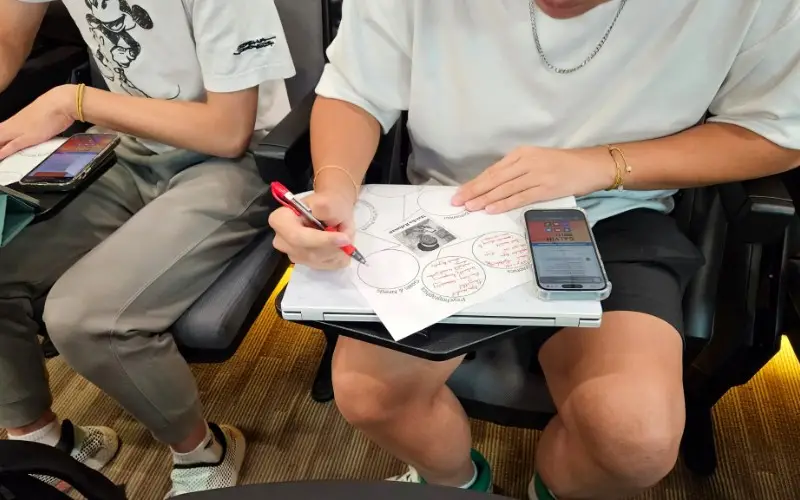
A student writes on a consumer-persona worksheet beside a phone during a classroom activity.

Galvin’s students turn their questions to an AI-generated consumer into a consumer profile in Global Voices: AI Persona Lab.

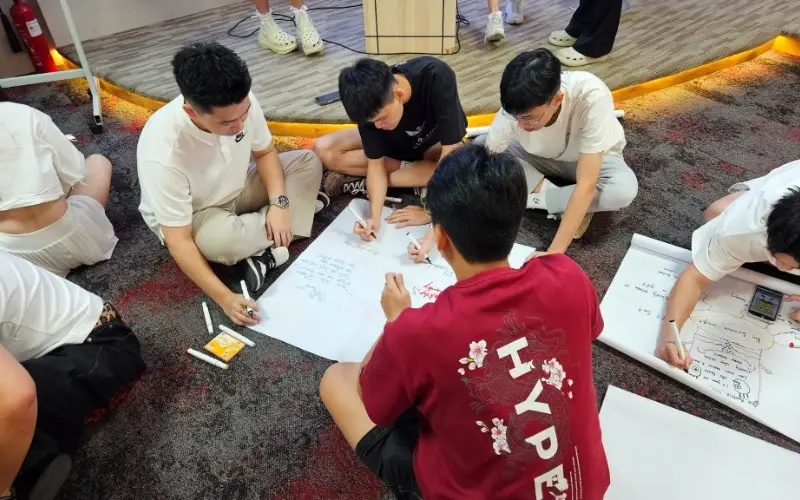
Students sit in a group on the classroom floor, writing and drawing on a large sheet of paper.

Galvin’s students map out a product idea together on a shared sheet of paper.

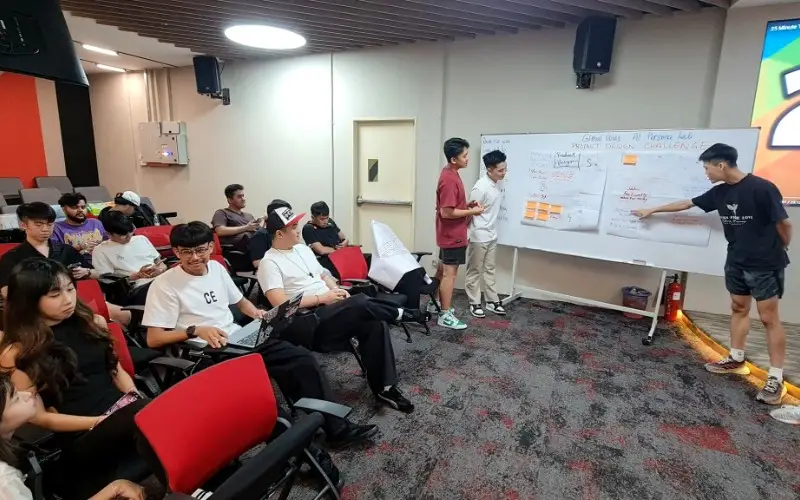
Students present paper sheets on a whiteboard labelled Global Voices AI Persona Lab Product Design Challenge.

Galvin’s students present their ideas in the Global Voices: AI Persona Lab Product Design Challenge.

Designing Global Voices Around Student Questions

In Consumer Behaviour, students study how factors such as motivation, perception and culture influence purchasing. Galvin had found that being able to define a cultural influence did not necessarily help a student investigate why an unfamiliar consumer might choose a particular product.


Arranging conversations with consumers across different countries and backgrounds was not always practical within the time and resources available to diploma students. He developed Global Voices to give them a supplementary setting in which to practise questioning and interpretation.


The activity starts with fictional consumers generated through artificial intelligence. Students decide what to ask about their motivations, preferences and buying habits. They then use established consumer behaviour theories to interpret the responses and build a consumer profile.


That profile informs a subsequent product design task. Students propose a product or marketing response, explaining how their choices relate to the needs they have identified. Later activities extend the work into simulated retail decisions and consideration of how a Malaysian brand might adapt to another ASEAN market.


Galvin designed the learning sequence and its resources so that an early investigation would inform later decisions. Lectures, tutorials and feedback remain part of the process. The simulated interaction gives students material to examine; their reasoning has to connect it to what they are studying.


He also makes the simulation’s limits explicit. AI-generated responses can be inaccurate, superficial or culturally stereotyped. A fictional persona is not evidence about real consumers, nor can it represent everyone from a particular background. Students are encouraged to question what it says.

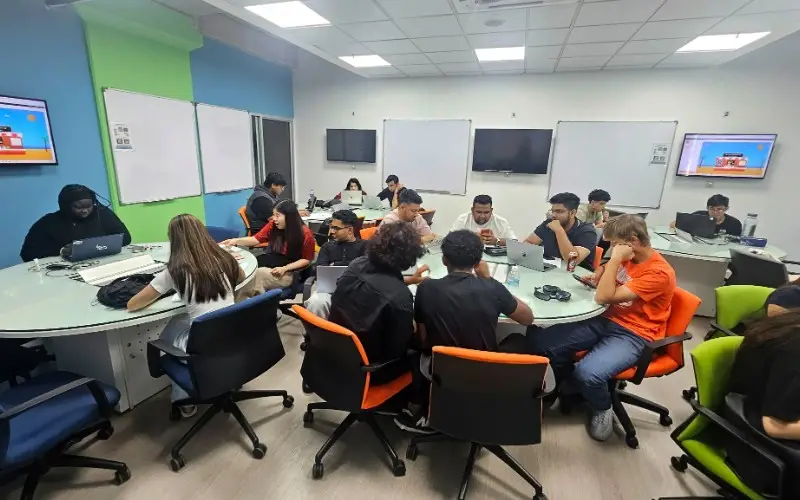
Students work on devices around classroom tables, with the Café Conquest interface on wall-mounted screens.

Galvin built Café Conquest: Beach Breeze so students could test business decisions without real financial risk.

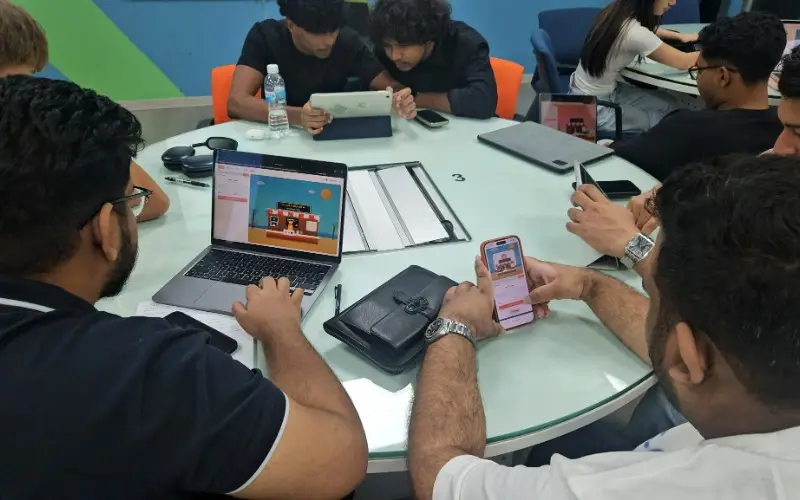
Students use laptops, a tablet and a phone around a table; a virtual café is visible on several screens.

In Café Conquest, a choice that looks sensible on its own can create difficulties elsewhere in the business.

Connecting Business Decisions in Café Conquest

In Principles of Marketing, Café Conquest: Beach Breeze gives students a different setting for applying business concepts. They run a virtual café, making decisions about prices, supplies, staffing and promotions while monitoring simulated financial results.


A decision that appears sensible on its own can create difficulties elsewhere. Increasing sales may not improve profits if costs are poorly managed. Students have to consider how their choices interact and explain the results using the concepts they have learned.


Galvin built the browser-based simulation to let students experiment without facing real financial risk. The teaching activity continues after they have operated the café: they examine their decisions, discuss the outcomes and reflect on what they might change.


The simulation offers a supervised opportunity to practise judgement. It cannot reproduce every complexity of a real organisation, and Galvin does not treat it as a substitute for workplace experience.

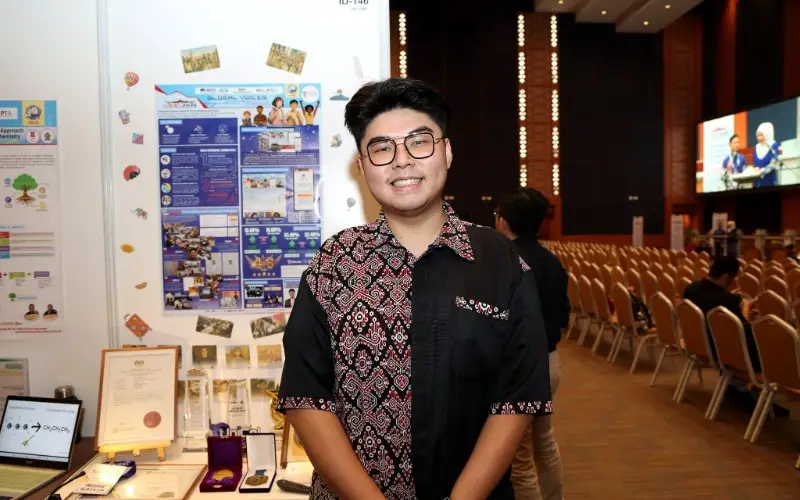
Galvin Lee stands beside a Global Voices project poster and a display of certificates and awards in an event hall.

Galvin with his Global Voices project, a Gold award winner at IUCEL and e-ConDev in 2025.

Evaluating and Refining His Teaching

Global Voices received Gold awards at the International University Carnival on E-Learning (IUCEL) and the International e-Content Development Competition (e-ConDev) in 2025, followed by Café Conquest at both competitions in 2026.


Developing the activities also changed what Galvin wanted to know about them. An enthusiastic response could tell him that students enjoyed a session, but he still needed to examine how they understood the subject.


‘One major issue is that student engagement does not automatically demonstrate deeper learning,’ he says.


He describes looking across assessment performance, learning outcomes, student work and activity feedback when reviewing his teaching. Each offers a different view. Feedback can capture a student’s experience of an activity; an explanation of a pricing decision can reveal how they have connected it to a business concept.


He is cautious about attributing differences between cohorts to one teaching intervention. Students from different years may have different characteristics or assessment conditions, and several teaching practices can contribute to their results.


The questions also extend to programme coordination. Clear assessment requirements and accessible resources affect the conditions in which students learn. In his own modules, Galvin has reorganised online materials to make weekly topics, study support and assessment information easier to navigate.


This is continuing work. Students’ questions and responses help him identify where activities and resources need further revision.

Galvin Lee takes a selfie in graduation robes, with a crowd gathered beside a lake behind him.

A former Taylor’s College student, Galvin now supports other students’ learning as a lecturer.

From College Student to Academic

Galvin grew up in Kuching, Sarawak, with two parents who were educators. He later studied Foundation in Business at Taylor’s College before continuing his education and eventually taking on teaching and programme responsibilities himself.


‘As a lecturer, I realised that understanding a subject well does not necessarily mean being able to help students understand it,’ he says.


His background in marketing and economics informed that approach. Simulations gave him a way to ask students to work through questions about behaviour, incentives and trade-offs.


Receiving TOYM recognition is meaningful to him at this early stage of his academic career, particularly as a former College student now supporting others’ learning. He intends to continue developing the teaching resources and evaluating how students use them.


He wants to know whether students can apply what they learn in one activity when the task or context changes.

If you’re interested in how consumer choices and pricing decisions shape a business, explore how you could develop that understanding through the Diploma in Business at Taylor’s College.

YOU MIGHT BE INTERESTED
{{ item.articleDate ? vm.formatDate(item.articleDate) : '' }}
{{ item.readTime }} Min Read