Programme Deep Dive: Your Journey as a Foundation in Business Student

{{ vm.tagsGroup }}

18 May 2026

7 Min Read

Taylor's Team (Editor)

IN THIS ARTICLE

You’ve probably noticed this without thinking too much about it. The same drink costs more at Starbucks than at a Mamak store. A brand suddenly becomes popular overnight. A product disappears, then returns with a new price, a new look, and somehow… still sells. None of this happens by chance.


Behind every price, promotion, and product is a series of decisions being made quietly in the background. Decisions about cost, competition, timing, and what people are willing to choose.


Business is not just about companies. It is about understanding the logic behind everyday choices. Why one brand holds your attention while another fades away. Why prices move. How trends catch on.


And once you start seeing it, you can’t help but get curious.

What It’s Like to Study Foundation in Business

At first, it does not feel like you are ‘studying business’.


It feels more like learning how to make sense of things you already see every day. Why do people choose certain brands? Why do some ideas take off while others fail? Why can a small change in price or design completely shift how something performs?


Instead of jumping straight into complex theories, you begin with the fundamentals that shape how businesses think and operate. You explore areas such as accounting, marketing, and economics, not as separate subjects, but as different ways of looking at the same situation. Gradually, you also begin to understand how these different perspectives connect and influence the way businesses make decisions.

Hand pushing a shopping cart beside rising graph lines and geometric patterns

The business world is louder than it looks

As you go deeper, you will learn that nothing in the business scene happens in isolation. A change in demand affects pricing. Pricing influences competition. Competition then shapes how a business positions itself. What looks like a single decision is often part of a chain of reactions happening behind the scenes.


You also begin to look at products and services differently. It is not just about what is being sold, but how it is presented, communicated, and perceived. Two similar products can perform very differently, simply because of how they are positioned and how people respond to them.


At the same time, you are introduced to the realities that shape how businesses operate in practice. Some guidelines and constraints influence what companies can and cannot do, and these factors play a role in every decision, even when they are not immediately visible.


What makes the experience different from school is how often you are asked to apply what you learn.


In a typical week, your learning goes beyond lectures. You might analyse why a brand is performing well, break down a real business scenario, or work in a group to propose solutions to declining sales. Along the way, you also begin to understand how people work, what motivates them, and why some teams and managers are more effective than others.


Over time, you begin to recognise patterns, question outcomes, and develop your own perspective. Business becomes something you can interpret, not just observe.

Join Us at Taylor’s Open Day: 1, 2, 8 & 9 August


 to dive into what really excites you! Explore Taylor’s College at our Open Day, where hands-on learning, exciting projects, and industry exposure help you turn your interests into a career you’ll enjoy. Due to high demand for our programmes, we recommend registering early to secure your spot.

Studying Foundation in Business in Malaysia

Colourful human profiles with symbols and patterns linked to ideas and different perspectives

  • The business world needs analytical minds, creative thinkers, communicators, and problem-solvers alike.

If you’re planning to take the Foundation in Business, you’ll need at least five credits in your SPM, O-Levels, or UEC equivalent.


If you’ve been exposed to subjects like Mathematics, Economics, or Business, that can be helpful, but it’s not a requirement. What matters more is your willingness to think, question, and explore how decisions are made.


Mathematics supports how you work with numbers, from understanding pricing to interpreting financial data. English helps you communicate your ideas clearly, whether through presentations, discussions, or written assignments.


Learning is mainly coursework-based, with final exams included for most subjects. You complete case analyses, presentations, and written assignments that apply what you’ve learned to different situations. Beyond the classroom, you also take part in field trips, competitions, and community-based projects, where you see how business concepts are applied in real settings.


Studying in Malaysia also places you within a fast-evolving business environment. You are not just learning concepts in isolation but surrounded by different business realities in everyday life. Being part of a multicultural environment also gives you exposure to diverse business perspectives and ways of working.


Think about platforms like TikTok Shop, where products can sell out within hours simply because of how they are presented. Or Shopee and Lazada campaigns like 11.11, where pricing, promotions, and timing are carefully planned to influence buying behaviour. Even services like Grab and food delivery platforms show how pricing, demand, and customer experience are constantly being adjusted in real time.


Through activities such as field trips, competitions, and collaborative projects, you begin to see how what you learn connects to how businesses operate in the real world.

Beyond the activities themselves, the learning experience is also shaped by the guidance students receive throughout the programme. At Taylor’s, lecturers play an active role in supporting students beyond subject knowledge alone, sharing industry perspectives and real experiences that help students grow in confidence, understanding, and awareness of how the business world operates.
– Irene Ong Pooi Fong, Senior Lecturer of the Foundation in Business

Where This Could Lead Next

After completing the Foundation in Business, you can progress into a range of degree programmes in areas such as:

Graduate wearing a mortarboard with a calculator placed above the cap.

  • One foundation. Different directions.

Each pathway builds on what you’ve been introduced to, but leads you towards different areas within business, whether that involves working with financial systems, understanding market behaviour, or developing new ideas and ventures.


These directions reflect how the field is evolving. As businesses respond to AI, data, digital platforms, and changing consumer behaviour, different areas of business continue to expand and take on new roles.


If you’re still exploring which direction suits you best, that’s part of the process. The foundation year gives you the space to explore different areas, so you can make a more informed decision when choosing your next step after completing the programme.


As your interests begin to take shape into real-world possibilities, you can explore different career pathways through Career Compass, where you can see the connection between what you study and career fields such as:

Is Foundation in Business Right for You?

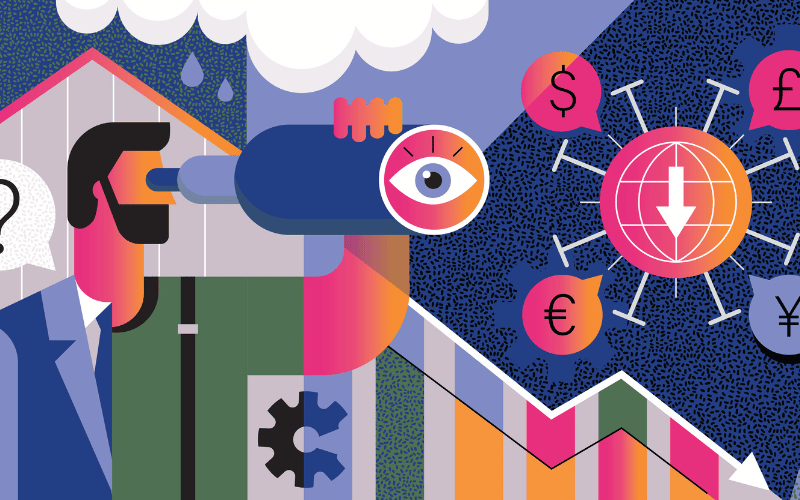
Man looking through binoculars towards business and financial symbols

Behind every trend is a business trying to understand people

Foundation in Business may suit you if you find yourself naturally curious about how things work. You might notice why certain brands stand out, question why prices change, or wonder how businesses respond to what people want.


If you are interested in looking at different possibilities, understanding what drives people’s choices, and being involved in planning and improving outcomes, this programme gives you the opportunity to explore these areas further.


What makes it especially dynamic today is the pace of change. Many decisions are increasingly influenced by data, digital platforms, and technologies such as AI, which help businesses respond to trends and changing behaviours.


Through Foundation in Business, you begin to build a broader understanding of how businesses operate in real-world settings and respond to changing competition. Along the way, you are also encouraged to think about how value is created, how businesses collaborate and adapt, and how different models shape the wider business environment. This gives you the flexibility to move into different areas later, whether towards finance, international business, entrepreneurship, or other pathways within the field.

Conclusion

It’s easy to think business is only about companies or profit. In reality, it is about understanding how decisions shape the things around you. The products you use, the brands you recognise, and the choices people make every day.


Once you begin to see these patterns, business becomes something more than a subject. It becomes something you can understand, question, and eventually take part in.


And that’s where your journey begins.

If you’re interested in understanding business, decision-making, and the factors that shape brands, products, and consumer behaviour, the Foundation in Business offers a pathway to explore different areas within the field and move towards a degree that fits your direction.

YOU MIGHT BE INTERESTED
{{ item.articleDate ? vm.formatDate(item.articleDate) : '' }}
{{ item.readTime }} Min Read