If We’re So Connected, Why Do We Feel So Divided?

{{ vm.tagsGroup }}

11 Mar 2026

5 Min Read

Taylor's Team (Editor)

IN THIS ARTICLE

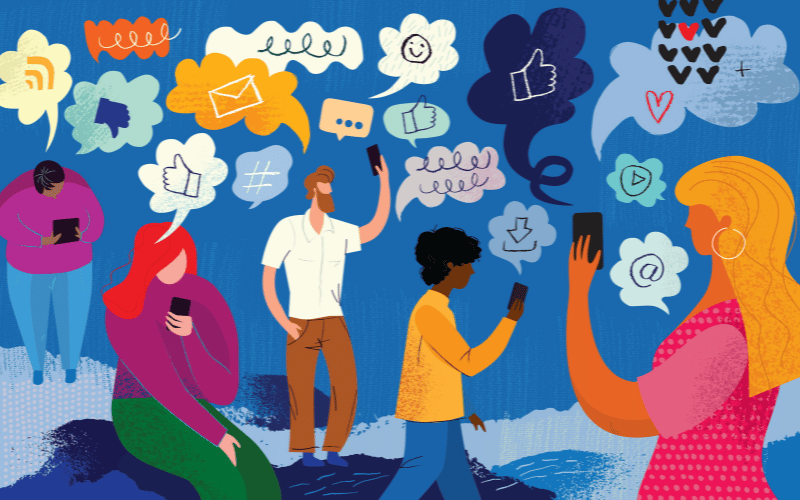
We live in a time where staying connected is easier than ever. Messages are delivered instantly, group chats stay active throughout the day, and conversations move quickly across different platforms. Yet despite this constant connection, misunderstandings seem just as common. Opinions form quickly, reactions follow almost immediately, and disagreements can appear before people have had the chance to fully understand one another.


Communication may now be faster and more accessible than ever before, but conversations can still lead to frustration, conflict, or a growing sense of division.


If we are more connected than ever, why does genuine understanding still feel so difficult to achieve?


When Conversations Move Faster Than Understanding

You may have seen this happen in a group chat or an online discussion. A message appears and replies start arriving almost immediately. Sometimes people respond before they have had much time to think through what they want to say.


A similar pattern appears when a piece of news or an issue goes viral in Malaysia. Posts, screenshots, short videos, and comments spread quickly, and different viewpoints begin appearing side by side.


When many opinions appear at once, it can feel as though the issue has already been worked through. The volume of responses gives the impression that enough thinking has already happened, making it seem as though there is already sufficient information to form a view.

Two abstract human figures with colourful overlapping shapes and lines around them

Same input, different conclusions.

Yet seeing many perspectives is not the same as understanding the issue. Making sense of a situation often requires time to examine context, reasons, and the different experiences shaping how people respond.


When conversations move quickly and information comes from many directions, people may begin forming positions before they have had time to pause, compare perspectives, and reflect on what they are seeing. As a result, opinions form before understanding has fully developed, making it easier for conversations to divide rather than clarify.

What It Really Takes to Understand Someone

Have you ever re-read a message and wondered if it sounded harsher than you intended? Understanding someone is rarely automatic. What a person says is only part of the message. Tone, context, and personal experiences all shape how those words are interpreted.


For example, a comment such as 'You could try doing it this way' may be intended as a practical suggestion. One student might hear it as helpful advice, while another may interpret it as criticism of their work. The wording remains the same, yet the meaning shifts depending on the listener’s expectations, experiences, and emotional state.

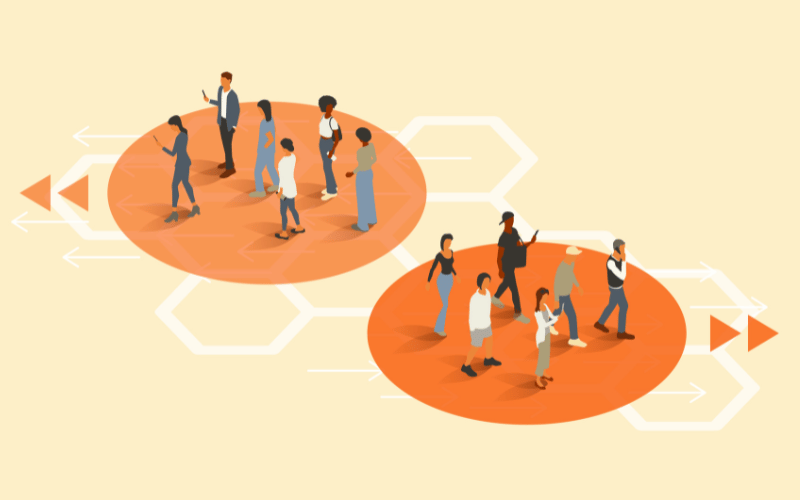
Two people walking in different circles overlap with each other as symbol of consensus of opinions

Understanding begins when we pause to ask.

In face-to-face conversations, cues such as tone of voice, facial expressions, or quick clarification help people understand what someone intends to say. In fast digital exchanges, however, many of these cues are missing. Messages appear quickly and often without the surrounding context that helps people interpret them accurately.


When conversations move rapidly, small misunderstandings can begin to accumulate. A message that feels dismissive may prompt a defensive reply, and what began as a simple difference in opinion can gradually turn into tension. The conversation then shifts away from the original topic and becomes centred on reacting to each other’s interpretations.


This is why genuine understanding often requires a pause. Instead of responding immediately, taking a moment to ask a question such as 'Could you explain what you meant?' allows space for clarification. Listening carefully, considering the context behind someone’s words, and remaining open to explanation are often what bring conversations back to understanding.

Listening and interpretation require openness. It helps to keep one’s cup empty while listening rather than becoming defensive.
– Nurul Rashidah Mohamed Roseli, Lecturer of the Foundation in Arts

Why Division Feels More Visible Today

Disagreements are not new. All of us hold different views on social issues, policies, or everyday decisions. In the past, many of these conversations remained within smaller circles, among friends, classmates, or family members.

social media And internet addiction

Our conversations are no longer limited to small circles.

Disagreements are not new. All of us hold different views on social issues, policies, or everyday decisions. In the past, many of these conversations remained within smaller circles, among friends, classmates, or family members.


Today, conversations often unfold in digital spaces. A discussion that begins with a single post can quickly draw attention from many others who were not part of the original exchange.


It also allows opinions to spread quickly through reposts, comments, and shares. When certain viewpoints appear repeatedly in feeds or comment threads, they can begin to feel more settled or dominant, even while the discussion is still developing.


Because these conversations are both visible and fast-moving, disagreements may appear larger and more intense than they might in slower, private discussions. For readers observing from the outside, this visibility can create the impression that divisions are sharper or more widespread than they actually are

What Helps Conversations Move Beyond Division

Two groups of people moving in opposite directions, illustrating the concept of mutual exclusivity

Clarity builds as the conversation unfolds.

Imagine two people looking at the same issue but interpreting it differently. At first, their perspectives may not fully align.


In situations like this, understanding rarely appears instantly. It often develops through small habits during the conversation itself. Instead of reacting immediately, people may choose to slow the conversation down and explore what the other person means. Some simple practices can help conversations move in this direction:


  • Ask clarifying questions rather than assuming what someone meant.
  • Pause before responding, especially when the topic feels sensitive.
  • Allow different interpretations to surface, instead of trying to settle the issue too quickly.
  • Listen for context, such as the experiences or perspectives shaping the other person’s view.


In arts-related classes, you practice these habits through discussion and interpretation. When analysing a film scene, an advertisement, or a social issue, discussions often reveal that people notice different details or emphasise different aspects of the same material. Through these conversations, students learn to explain their own perspective while also listening carefully to how others interpret the example.


Over time, arts-based learning creates space for discussion, reflection, and dialogue, allowing students to practise interpretation as part of the learning process.

Conclusion

Often, the division we feel is not simply caused by disagreement, but by limited understanding. In a world where communication is fast and constant, staying connected is easy. Understanding each other, however, still takes time.


When we slow down, ask better questions, and stay open to different perspectives, conversations can begin to shift. The art of understanding people grows through curiosity, reflection, and the effort we make to listen and learn from one another.

If you’re curious about how meaning is shaped through culture, language, and perspective, the Foundation in Arts offers a starting point to explore how understanding forms in a complex world.

YOU MIGHT BE INTERESTED
{{ item.articleDate ? vm.formatDate(item.articleDate) : '' }}
{{ item.readTime }} Min Read