If It Works, Why Still Think About It?

{{ vm.tagsGroup }}

13 Jul 2026

7 Min Read

Taylor's Team (Editor)

IN THIS ARTICLE

Think about the last time you used Waze. You didn't need to know the road. You didn't need to understand why it rerouted you at Kesas or why it preferred NPE over the Federal. You just followed the arrow, arrived, and moved on with your day. How it worked behind the scenes stayed a mystery, and that was fine.


This is the world most of us are living in now. You don't need to understand how TNG processes your Touch 'n Go payment to get through the toll. You don't need to know how Grab's algorithm prices your ride. You open the app, you tap, it works. Modern systems are designed to remove friction, and they are extraordinarily good at it.


But here is the thing about systems that work perfectly: you stop looking at them and ask what is underneath.


And somewhere in that comfort is a question worth sitting with: if everything is built to just work, what happens to the part of you that was supposed to figure things out?
The Design Behind the Ease, and What It Quietly Takes

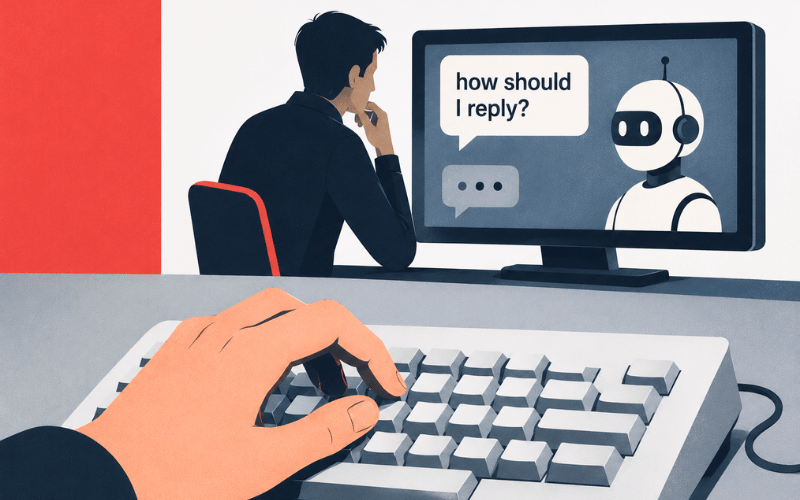
Person using a computer displaying an AI chat interface with a speech bubble that reads "How should I reply?"

Ctrl + Think.


Here's something worth noticing: convenience is not neutral. It is designed. Someone made choices about how these systems work, who they work for, and what kind of user they had in mind when they built them.


Take something as ordinary as autocorrect. It learns from patterns: the most common words, the most likely completions. It works brilliantly if you're typing standard Malay or English. But if you're code-switching mid-sentence the way most Malaysians actually speak, "eh bro, u free tak petang ni?", it fights you. It was not built with you in mind. It was built for a version of you that is tidier, more uniform, easier to predict.


And here is the quieter problem: the more a system handles your thinking for you, the less practice you get at doing it yourself. This is not a dramatic collapse. Nobody wakes up one day unable to reason. It is more like a muscle that stops being used. You still have it. It is just a little slower, a little less certain, a little more dependent on something external to prompt it into motion.


Psychologists call this cognitive offloading: the habit of letting tools carry what your brain used to carry. It is not inherently bad. Writing things down is cognitive offloading. So is a calculator. The question is what you are offloading, and whether you still understand the thing you've handed over.


What gets offloaded first, it turns out, is the most foundational part of thinking: the habit of observing, forming a hypothesis, and sitting with uncertainty long enough to test it. This mirrors the logic of scientific reasoning. Most people just call it figuring something out. Either way, it is the capacity that convenience quietly borrows first. 

What actually gets tested, whether in a lab or anywhere else, is a set of thinking habits, not just the knowledge. Most students have spent years being praised for quick right answers, so a wrong result feels like something to hide, not learn from. Science asks the opposite: notice the mismatch and investigate it, rather than shrugging it off.
– Law Kung Pui, Senior Lecturer of Foundation in Science

The Illusion Only Shows When Something Breaks

The trouble with a muscle you rarely use is that you do not notice it weakening until you actually need it. For most of your life, the system will hold. Waze will get you there. Autocomplete will fill in the sentence. The AI will summarise the article. And because it keeps working, it is easy to assume that the understanding underneath is still there, that you could figure it out yourself if you needed to.


You probably think you could.


Then something breaks. The GPS signal drops in Bukit Bintang on a Friday night, and suddenly you are in a one-way system you do not recognise, with three cars behind you and no idea whether turning left takes you toward Jalan Imbi or deeper into a parking structure. The app is not loading. You have to actually think.

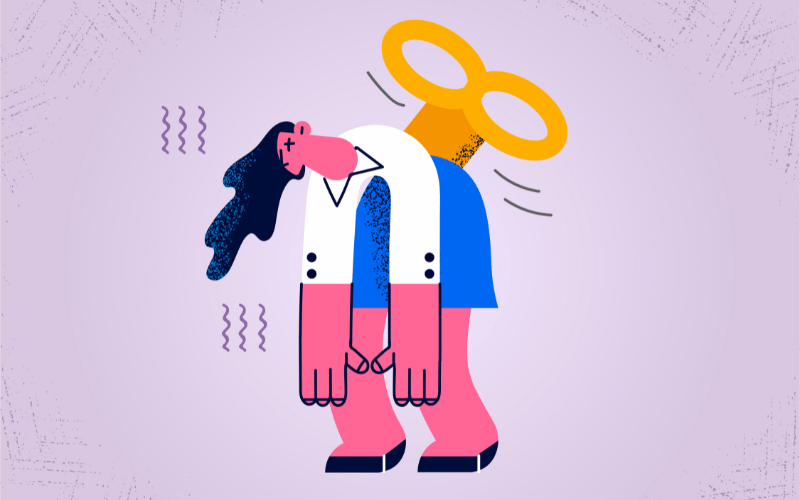
Person with a large golden key attached to their back, walking forward

 It feels effortless while everything works. The real test begins when it doesn't.


Say, you are in the middle of a group project presentation, and your lecturer stops you mid-slide and asks you to explain the reasoning behind your recommendation. And you realise the thinking was always outsourced. You had the answer. You had it from an AI summary, or a YouTube explainer, or a classmate who seemed more confident. But the path that produced it? You never walked it yourself.

AI can explain things clearly and convincingly, even when it's wrong. The real test is simple: can you explain the answer in your own words? If not, you don't understand it yet.
– Law Kung Pui, Senior Lecturer of Foundation in Science

The system felt like understanding. It produced the right outputs. It got you through enough situations that you stopped noticing it was doing the work. And then it couldn't. And neither could you. This is not a scare story. It is just an honest description of how dependency forms.

Some Never Had the Luxury, and What Thinking Protects

It is worth saying plainly: not everyone gets to take the easy way.


The cognitive ease that comes with well-designed systems is not distributed equally. A student navigating a university application in English when it is their third language, does not have the luxury of skimming. A first-generation university student whose parents have no experience with PTPTN, JPA, or scholarship applications cannot rely on family knowledge. They have to actually understand the system, because nobody around them can fill in the gaps. A fresh graduate applying for jobs in an industry that nobody in their family has ever worked in has to think harder, ask more questions, and build from less.


This unevenness shows up in the classroom too, well before any job application. As Law puts it, students who spent years being trained to produce the right answer quickly often find open-ended lab work harder, because sitting with an unresolved or imperfect result is not a skill they got much practice with.

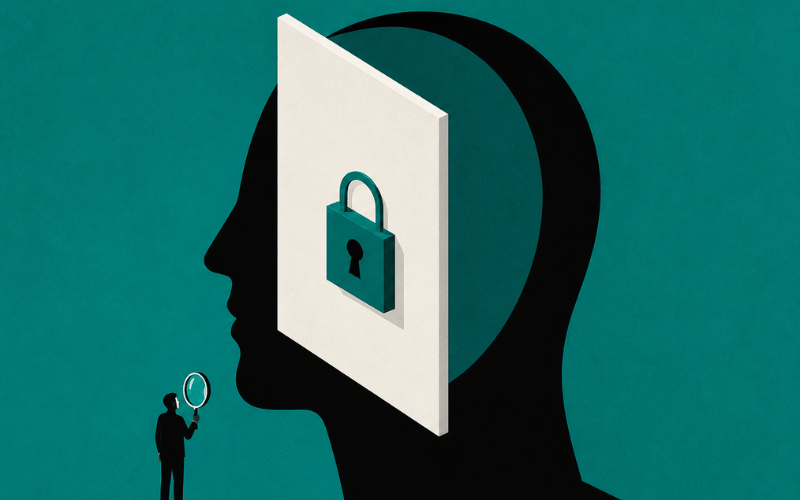
Silhouette of a human head with an open door revealing a padlock, with a small person standing outside.

You can't always choose your starting point. You can choose how you think your way forward.


For them, thinking was never optional. It was the only available tool.


This matters because it reframes what thinking actually is. It is not just an academic exercise, or a sign of intelligence, or something you do in an exam. It is a form of agency. It is what lets you interrogate a system rather than just accept its output. It is what lets you ask: who built this, what did they assume, and does that assumption actually apply to me?


These are not abstract philosophical questions. They are the same moves that underpin scientific reasoning: observe, question, test, revise. The habit of noticing when something does not add up, and refusing to let the discomfort push you toward a quick answer, is both how good science works and how capable people navigate a world that was not always designed with them in mind.


That capacity does not come automatically; rather, it is built through practice, and it is available to anyone who decides to practise it, regardless of background.


Thinking, in this sense, is not a burden. It is protection.

You Can Afford Not to Think, Until You Can't

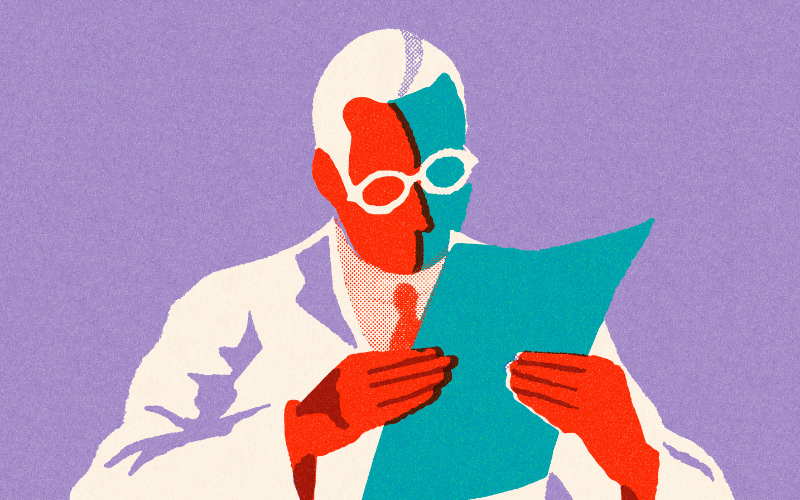
Person with a two-tone coloured face, holding and reading a sheet of paper.

Don't stop at "it works." Ask why it works.

A wrong answer only looks wrong to someone who already knows what a right one looks like. That's why the basics still matter, not as the end goal, but as the foundation for noticing when something's off.
– Law Kung Pui, Senior Lecturer of Foundation in Science

The systems around you will keep improving. AI will get better at summarising, predicting, and completing. More friction will be removed. More decisions will be made on your behalf, faster and more accurately than you could make yourself. None of that is the problem.


The problem is mistaking a smooth surface for solid ground. The convenience is real. The ease is real. But underneath it, your capacity to navigate without it, to reason when the app fails, to question when the output is wrong, to understand rather than just use, either grows or it quietly doesn't.

If you're curious about how understanding is built through observation, testing, and discovery, the Foundation in Science offers a starting point to explore the ideas, questions, and processes that shape our understanding of the world

YOU MIGHT BE INTERESTED
{{ item.articleDate ? vm.formatDate(item.articleDate) : '' }}
{{ item.readTime }} Min Read